

The rabbit marching up your sleeve
Mnemonic processing as a mechanistic exegesis of consciousness

“Eh…what’s up, Doc?”
~ Bugs Bunny

The article I have referenced above, From Atoms to Qualia - The Neuroscience of Consciousness, remains my essay with the most engagement on Substack, which does not surprise me as it deals with a subject matter at the root of all things: consciousness. It breaks down some prominent scientific theories of the relationship between neural machination and subjective experience, with a focus on the philosophical contrast between reductionist and non-reductionist perspectives. While these conceptual frameworks hold promise for advancing the study of the mind, the scholarly literature contains reports of captivating clinical oddities that call into question their explanatory scope. In this issue of ZAGROSCIENCE, I will examine how these curious experimental cases may be resolved by expounding on one model in particular that appears to have some answers: the Memory Theory of Consciousness—or MToC.
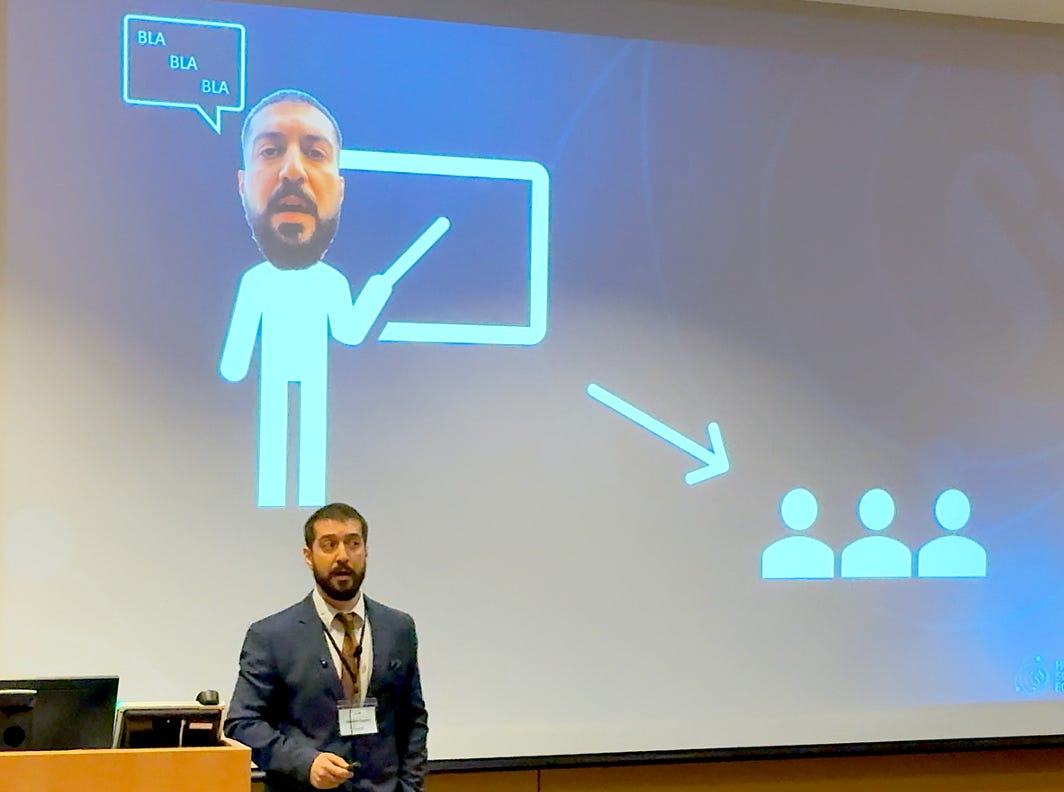
I recently gave a talk on memory and consciousness at the 1st Hojan Science Forum, an experience that I recount in great detail in another piece:

I explained to my audience how MToC, which was proposed by Budson et al., (2022), conceives of phenomenal experience as a complex mnemonic derivative of the episodic memory system, which sustains the capacity to encode and recall past life events. In my doctoral dissertation (Tavakol, 2023), I discuss the cognitive origins of episodic memory, pointing to work done by Endel Tulving, a pioneer in the field, who argued that it is an evolutionary embellishment that emerged from an archaic cognitive system dealing with semantic memory, the ability of the brain to represent facts and notions as a mental map of concepts. So prior to reading about MToC, I was already aware that ancillary layers of neural processing could develop like add-ons to the scaffolding of preexisting brain circuits and mechanisms. Indeed, in Tavakol et al., (2021), I describe this idea when comparing semantic and spatial memory:
Given that the human brain is a finite organ capable of multiple mental functions, it is not surprising that many neural operations show anatomical convergence. In fact, some of the regions discussed herein in the context of spatial memory may apply equally as well to other related cognitive faculties […] It has been proposed that the brain may organize semantic information as a navigable conceptual mental space, a mechanism not unlike the encoding of spatial information into a cognitive map via the concerted activity of hippocampal place cells and entorhinal grid cells […] Recent findings support the involvement of domain-invariant learning algorithms that apply to the neural organization of both spatial and semantic information […]
Budson et al., makes a similar observation when considering the emergence of consciousness from episodic memory:
To elaborate, our theory of consciousness rejects the idea that consciousness initially evolved in order to allow us to make sense of the world and act accordingly, and then, at some later point, episodic memory developed to store such conscious representations. Our theory is that consciousness developed with the evolution of episodic memory simply—and powerfully—to enable the phenomena of remembering. We view the fact that our ability to imagine things in consciousness is constrained by and related to our episodic memory […] as another piece of evidence supporting the idea that consciousness evolved as part of episodic memory.
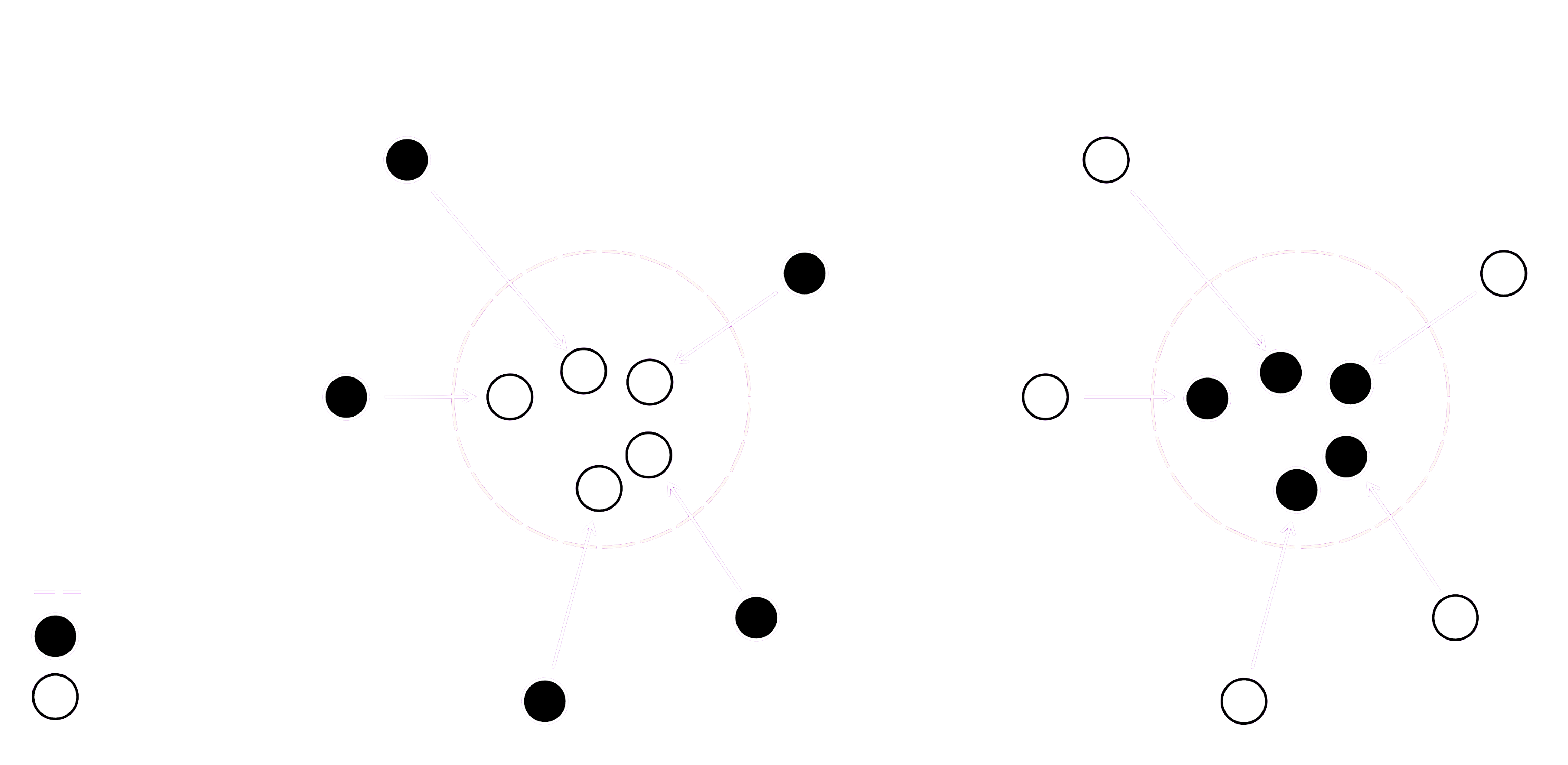
Tersely put, MToC flips our current understanding of how memory works on its head. The conventional neuroscientific view is that when our brains store information, the medial temporal lobes (MTL) assemble the constituent elements of conscious perception like pieces in a jigsaw puzzle. Accordingly, consciousness precedes mnemonic function by providing the memory system with the raw material it needs for encoding and recall. However, the radical proposition made by MToC is that subjective experience, itself, is the phenomenal character associated with the integration of discrete unconscious neural computations on a moment-to-moment basis. But since there is a processing delay of ~500 ms between stimulus onset and conscious awareness, MToC holds that consciousness essentially boils down to a fleeting memory of the immediate past. The authors of the Budson paper introduced this novel framework given the persistence of long-standing experimental paradoxes that have eluded previous theories of consciousness. Collectively referred to as order problems, these are curious instances in which our conscious awareness seems to be at odds with the linear flow of time.
In the following section, we will consider how MToC may help us rethink the intractability of some of these uncanny clinical manifestations.
Cutaneous rabbit
This illusion is produced when an experimenter rapidly taps a subject’s arm at equally spaced intervals near the wrist (5 taps), elbow (3 taps), and shoulder (2 taps) while the subject looks away. Instead of feeling three separate and successive sets of taps at those specific points, the individual will instead report sensations akin to a tiny rabbit running up their arm. This peculiarity entails that the perception of stimuli can be retroactively tampered with by subsequent inputs. In the words of the famous Canadian psychologist, Steven Pinker, what this experiment allegedly demonstrates is that:
…consciousness does not track sensory events in real time, but our brain is constantly editing our experience after the fact to make it feel more coherent […]
Budson et al., argues that MToC resolves the temporal paradox posed by this illusion by virtue of the chronological lag that separates real time events from their downstream phenomenological corollaries. During this latency, the brain may retroactively fabricate the intervening taps that produce the false sensation of a rabbit hopping up the arm. Based on research my colleagues and I have conducted (Tavakol et al., 2021; Li et al., 2021), I would conjecture that hippocampal pattern completion may provide some insights into the neural mechanisms at play. Located deep within the MTL, the hippocampus is arguably the most important mnemonic substrate owing to its role in indexing memory traces (or engrams) across the cortex. Cohen et al., (2025), which looks at early childhood pattern completion—and its counterpart, pattern separation—states:
Both pattern separation and pattern completion are hippocampal-dependent processes. However, they are distinct neurocomputations that play complementary roles in episodic memory […] Pattern separation distinguishes one memory from partially overlapping memories via the dentate gyrus which codes similar inputs as sparse uncorrelated patterns of activity […] In contrast, pattern completion, which allows for holistic representations of experiences, is believed to rely on the hippocampus’s CA3 subfield, whereby activating one part of an event causes the other components to simultaneously activate […]
So if consciousness depends on episodic memory—as per Budson et al.—and episodic memory, in turn, relies on pattern separation/completion, then it stands to reason that the cutaneous rabbit illusion could in principle be caused by a misfiring of the CA3 hippocampal subfield, falsely filling in the gaps to make the sequential series of taps along the arm feel like tiny little feet marching up one’s sleeve.
